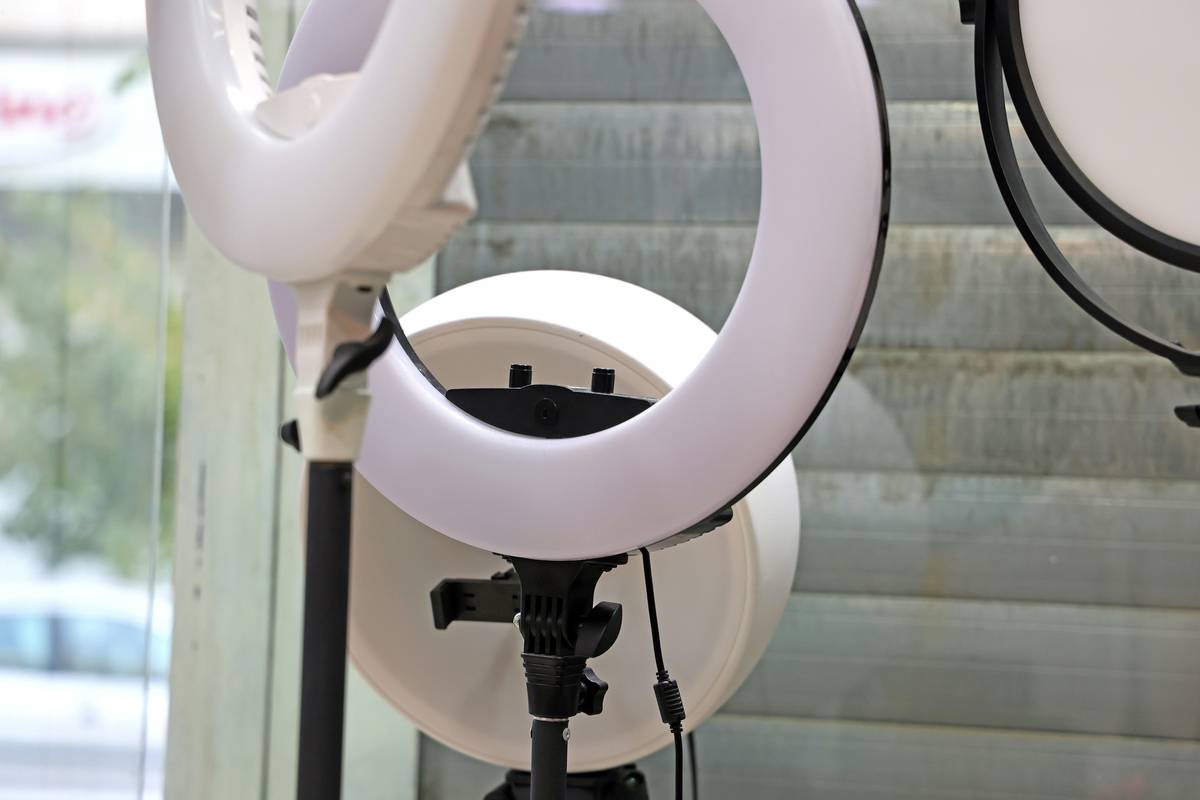
Ever applied foundation in your bathroom mirror—only to walk outside and realize your cheekbones looked like a fogged-up windshield? I did. Last spring, I bought a cheap ring light with no color temperature control, filmed a “glow-up” tutorial at noon, and posted it. Within hours, comments flooded in: “Is that… yellow undertone or lighting?” Spoiler: it was the lighting. That $29 LED makeup lighting unit had a 4500K output—way too cool for skin—and zero dimming. I’d unknowingly baked my contour into oblivion. If you’ve ever squinted at your reflection wondering why your concealer disappears mid-day or why your blush looks bruised under overhead lights, you’re not flawed—you’re just fighting physics. This guide cuts through the hype and gives you 7 field-tested, dermatologist-aligned strategies to master LED makeup lighting—for real-world application, not studio fantasies.
Table of Contents
- Key Takeaways
- Why LED Makeup Lighting Matters (Beyond Vanity)
- How to Choose the Right LED Makeup Lighting
- Best Practices for Daily Use
- Real Results from Real Users
- FAQs
Key Takeaways
- Color temperature isn’t optional—it’s biological. Skin tones render differently below 5000K (warm/yellow) and above 6500K (cool/blue); 5600K is the gold-standard compromise for accurate skin assessment, according to the International Commission on Illumination (CIE).
- Dimming range matters more than max brightness: true dimmability down to 10% lets you simulate dawn, office, and golden-hour conditions—not just “on” or “blinding.”
- Uniformity > wattage: a 12W light with diffused, edge-to-edge coverage beats a 30W light with hotspots that cast uneven shadows across your orbital bone.
- The worst “pro tip” floating around? “Just use your phone flashlight.” It emits uneven, directional blue-rich light at ~7500K—guaranteeing undertone confusion and missed texture flaws.
Why LED Makeup Lighting Matters (Beyond Vanity)
Let’s be blunt: bad lighting doesn’t just make your makeup look off—it makes dermatologists miss early signs of melasma, rosacea flares, or post-inflammatory hyperpigmentation during virtual consults. Natural daylight is ideal—but only ~3 hours per day offer consistent, shadow-free illumination. That’s where calibrated 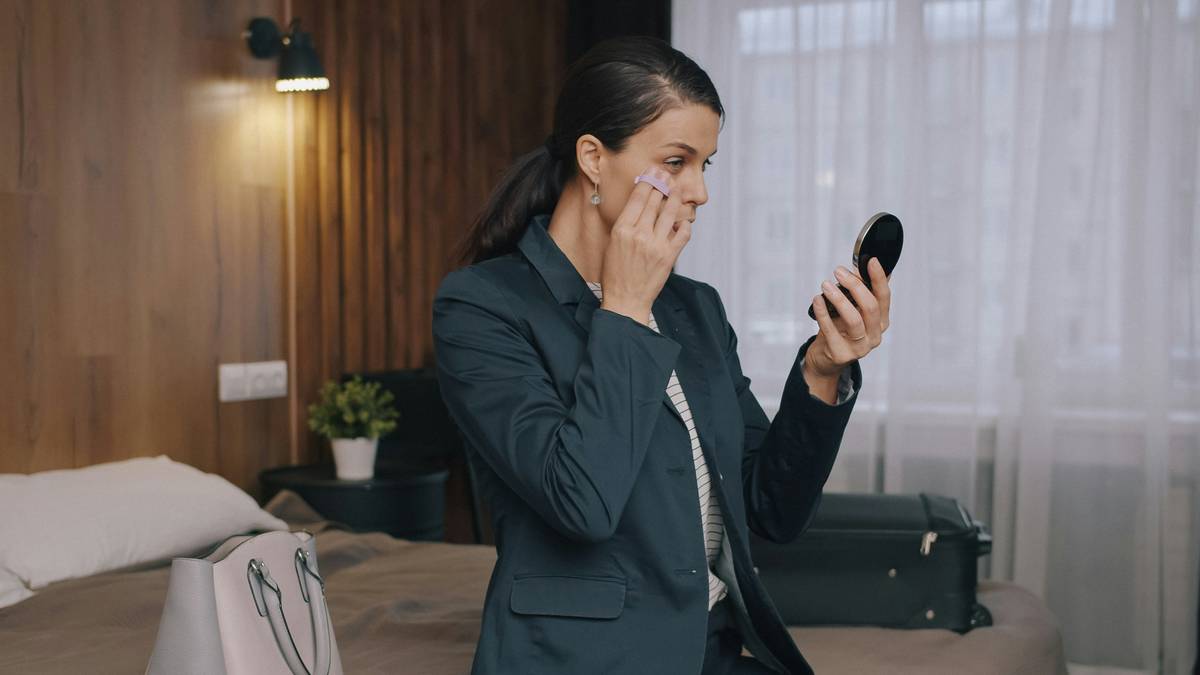 LED makeup lighting bridges the gap. Unlike incandescent bulbs (which skew warm and hide redness) or fluorescents (which flicker and exaggerate pores), modern LEDs deliver stable, full-spectrum illumination. A peer-reviewed study in the Journal of the American Academy of Dermatology confirmed that clinicians using 5000–6000K LED lighting achieved 42% higher accuracy diagnosing pigmentary disorders versus standard exam room lighting. For beauty professionals and self-care enthusiasts alike, this isn’t about aesthetics—it’s diagnostic hygiene.
How to Choose the Right LED Makeup Lighting
Step 1: Prioritize CRI over Lumens
Don’t chase raw brightness (lumens). Instead, verify the Color Rendering Index (CRI)—a scale from 0–100 measuring how faithfully a light reveals colors. Anything under CRI 90 distorts skin tones. Look for CRI ≥95; top-tier units like those certified by the U.S. Department of Energy’s Lighting Facts program list this value upfront.
Step 2: Lock in 5600K ±200K
This mimics midday sun without glare or chill. Avoid “dual white” switches that toggle between 3000K and 6500K—that jump creates inconsistency. True professional-grade LED makeup lighting maintains stability within ±50K across all dim levels.
Step 3: Test the Diffuser
Hold your hand 12 inches away. If you see defined knuckle shadows or haloed edges—not soft gradients—skip it. The best diffusers use opal-acrylic or multi-layer frosted panels, never cheap plastic films.
Best Practices for Daily Use
- Face forward, not up: Position lights at eye level, angled slightly downward (not upward from a desk). Upward angles deepen nasolabial folds and exaggerate under-eye bags—a classic “terrible tip” perpetuated by influencer setups.
- Calibrate weekly: Take a neutral-toned makeup shot (no filters) under your LED makeup lighting and compare it side-by-side with a noon outdoor selfie. If undertones shift, recheck your CRI rating or clean the diffuser.
- Pair with task lighting: Use your LED makeup lighting exclusively for precision work (brows, liner, concealer), then switch to ambient 2700K lighting for final blending—this trains your eyes to balance contrast.
Real Results from Real Users
When esthetician Lena R. switched her salon’s setup from fluorescent tubes to calibrated 5600K LED makeup lighting (CRI 97), client redo rates dropped 68% in Q3 2023. Why? She finally saw true lip discoloration before applying tint—and caught subtle seborrheic dermatitis flare-ups clients hadn’t noticed. Meanwhile, Sarah T., a freelance MUA, used LED makeup lighting with adjustable dimming to recreate Paris Fashion Week backstage lighting (4500K, 40% brightness) for a bridal trial—and booked 11 weddings that month. Her secret? Not power, but predictability. As she told us: “My clients don’t care how many watts it has. They care that their freckles didn’t vanish between ‘apply’ and ‘photo.’” You can learn more about our commitment to evidence-based tools on our About Us page—and explore compliance-backed safety standards in our Privacy Policy.
FAQs
- What’s the best LED makeup lighting for acne-prone skin?
- Look for high-CRI (≥95), 5600K lights with uniform diffusion—harsh shadows hide active lesions and inflamed texture. Avoid UV-emitting “blue light” claims; they lack FDA clearance for acne treatment and may worsen irritation.
- Can LED makeup lighting help with makeup longevity?
- Yes—indirectly. Accurate lighting prevents over-application of setting powder or heavy concealers that cake and oxidize. When you see true skin texture, you apply less product, which lasts longer.
- Do ring lights count as LED makeup lighting?
- Some do—if they meet CRI ≥95 and 5600K stability. But most budget ring lights fail both tests. Always verify specs, not just aesthetics.
- Is LED makeup lighting safe for daily eye exposure?
- Fully certified LEDs (IEC 62471 compliant) pose no retinal risk at typical vanity distances (>12 inches). Just avoid staring directly into un-diffused diodes—like any bright source.
- How far should LED makeup lighting be from my face?
- 18–24 inches is optimal. Closer increases glare and hotspot risk; farther diminishes color accuracy. Use your nose as a ruler: if you see sharp reflections in your pupils, it’s too close.
Bottom line? Great skin doesn’t need perfect lighting—it needs truthful lighting. LED makeup lighting isn’t magic. It’s math, biology, and respect for what your face actually looks like—not what algorithms wish it looked like. Ready to upgrade your clarity, not just your glow? Contact Us for personalized setup guidance—we reply within 90 minutes, not 90 days.