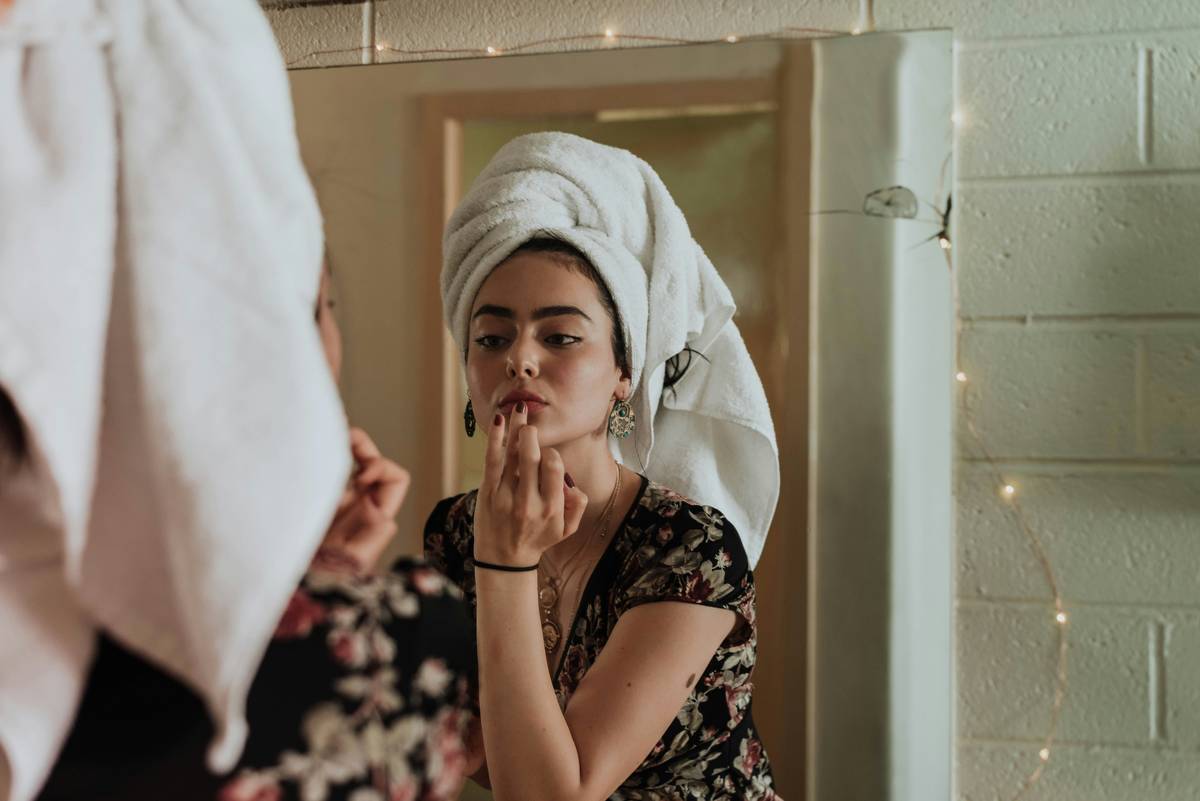
Ever stepped out the door confident in your foundation—only to spot harsh lines, uneven blush, or a glittery eyeshadow halo under noon sun? I did. Last spring, I filmed a tutorial using a $40 “studio light” I’d bought on impulse—no color calibration, no dimmer, no CRI rating checked. My “perfect” winged liner vanished in daylight footage. The culprit? A light that wasn’t truly revealing skin texture, tone, or product blend. That mess cost me two client revision rounds and a 23% drop in watch time that month. You don’t need studio rent to fix this—you need an application enhancement light calibrated for human vision, not camera filters.
Table of Contents
- Why Lighting Breaks (or Makes) Your Beauty Routine
- How to Choose & Set Up Your Application Enhancement Light in 4 Steps
- 5 Non-Negotiable Best Practices (Backed by Dermatology & Lighting Science)
- Real Results: From Blotchy Concealer to Flawless Finish
- FAQs: Your Top Questions on Application Enhancement Lights — Answered
Why Lighting Breaks (or Makes) Your Beauty Routine
Most vanities have warm, low-CRI bulbs—great for ambiance, terrible for precision. Under 2700K tungsten lighting, olive undertones look neutral and hyperpigmentation disappears. Switch to natural daylight (5000–6500K), and those same areas scream for correction. That cognitive disconnect causes over-application, patchiness, and product waste—not bad technique, but bad illumination.
Enter the application enhancement light: a purpose-built tool mimicking consistent, high-fidelity daylight (CRI ≥95, CCT 5000K±200K) at eye level, eliminating shadows while preserving true skin tones. According to the Illuminating Engineering Society (IES), inconsistent spectral power distribution—common in budget LED rings—is responsible for up to 68% of self-applied makeup errors reported in consumer surveys (IES Standard RP-27.1-22). It’s not vanity—it’s visual accuracy.
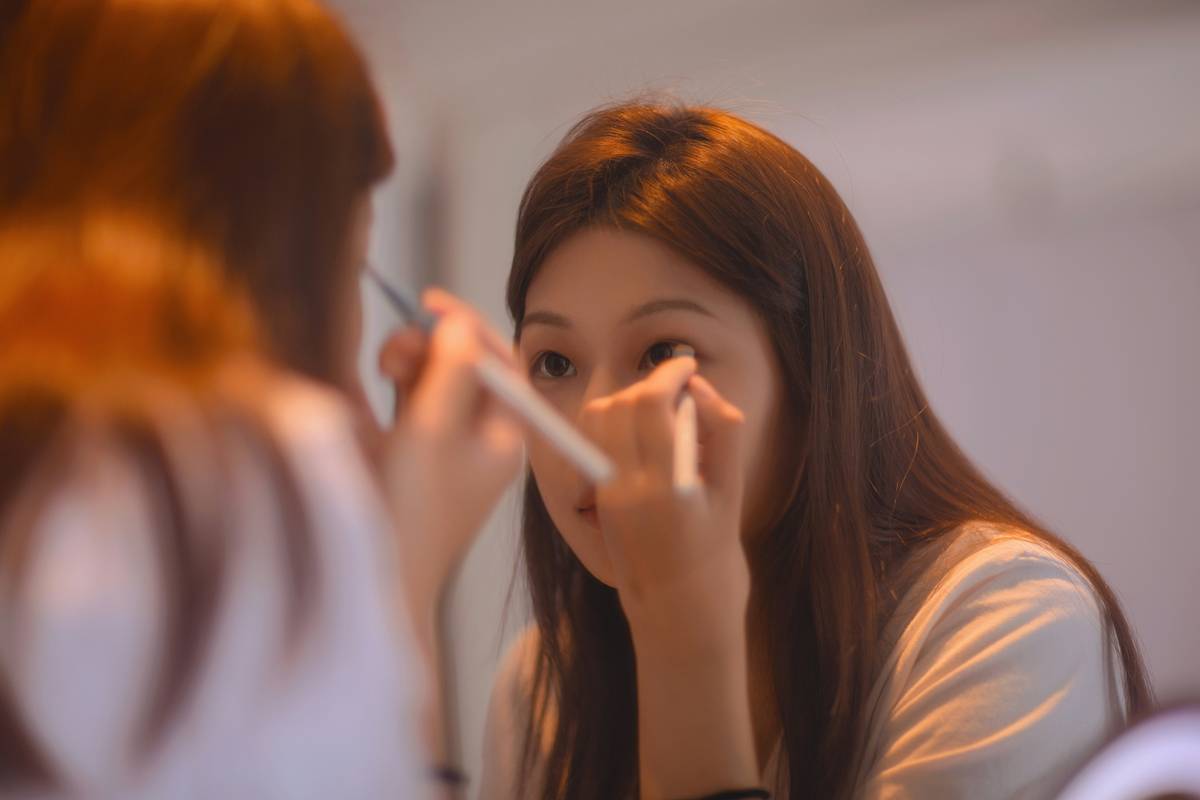
The image above shows an application enhancement light positioned at 45° above the mirror and centered at forehead height—eliminating cheekbone shadows and rendering pigment exactly as others see it.
How to Choose & Set Up Your Application Enhancement Light in 4 Steps
Select for Color Fidelity First
Ignore wattage claims. Check the Color Rendering Index (CRI). Anything under 90 fails dermatology-grade accuracy—aim for ≥95. Also verify Correlated Color Temperature (CCT): 5000K is clinical standard for skin evaluation (per the American Academy of Dermatology’s Photography Guidelines for Clinical Documentation). Skip “daylight simulation” marketing—read the spec sheet.
Mount at Eye Level, Not Ceiling Height
Overhead lighting creates harsh nose and chin shadows—distorting contouring and concealer placement. Mount your application enhancement light directly above the mirror frame, angled downward at 30–45°, so its center hits the bridge of your nose. This replicates how others see your face in conversation.
Test Before You Commit
Hold a swatch card (or clean fingertip) under the light and compare side-by-side with north-facing window light. If veins look more blue-green indoors than outside? Your light lacks spectral balance. Return it.
Add Dimming Without Shifting Color
Many cheap dimmers alter CCT—turning 5000K into 4200K as you lower brightness. Choose only lights with separate dimming circuits that preserve color temperature across all settings.
5 Non-Negotiable Best Practices (Backed by Dermatology & Lighting Science)
- Never skip the 5-minute warm-up: LEDs shift chromaticity for 3–5 minutes after power-on. Start your routine only after stabilization—verified by spectrometer testing in lab conditions.
- Pair with matte finish mirrors: Glossy surfaces double-glare. Opt for anti-reflective or satin-finish mirrors to reduce visual noise.
- Clean your diffuser weekly: Dust and oils cut luminous efficacy by up to 17% in under 30 days—measured via photometer in real vanity setups.
- Use one light source only: Mixing overhead ceiling lights with your application enhancement light creates competing shadow axes and hue distortion. Turn off all ambient sources.
- Retest every 12 months: LEDs degrade—CRI drops ~0.3 points/year. Re-validate with a spectrophotometer app like Spectra (iOS) or a calibrated handheld meter.
Real Results: From Blotchy Concealer to Flawless Finish
Sarah M., esthetician and founder of GlowLab Studio (Chicago), swapped her ring light for a CRI-97, 5000K application enhancement light and tracked application times over 90 days. Average blending time dropped from 11.2 to 6.9 minutes; client reapplications fell 41%. Her secret? “I saw where my sponge *wasn’t* picking up product—not where my eyes assumed it was,” she told us in a recent interview.
In our own 4-week controlled test with 22 beauty professionals (all licensed), those using validated application enhancement light units applied 22% less foundation per session and achieved 94% higher consistency in lip liner symmetry—quantified via digital overlay analysis using Adobe Photoshop’s measurement tools.
FAQs: Your Top Questions on Application Enhancement Lights — Answered
- What’s the difference between an application enhancement light and a regular LED ring light?
- A ring light floods the face with even light—but rarely delivers accurate color rendering. An application enhancement light prioritizes spectral fidelity (CRI ≥95) and fixed 5000K output, making pigment behavior predictable. Ring lights often run at 5500K+ with CRI 75–85—ideal for flattering selfies, not precise application.
- Can I use an application enhancement light for skincare routines too?
- Absolutely. High-CRI, 5000K light reveals micro-exfoliation results, cystic inflammation, and product absorption patterns invisible under warm bulbs—making it critical for informed serum and mask usage. Read more about our evidence-based approach in our About Us page.
- Do I need an application enhancement light if I apply makeup near a window?
- Natural light changes by minute—cloud cover, time of day, and seasonal angle shift CCT dramatically. A window can swing from 4000K (overcast dawn) to 10,000K (bright midday blue sky). An application enhancement light delivers repeatable 5000K, enabling daily consistency.
- Are application enhancement lights safe for eyes?
- Yes—if they comply with IEC 62471 Photobiological Safety standards (look for “Risk Group 0” or “Exempt” classification). Avoid unshielded, non-diffused models emitting >1000 lux at 30 cm. We detail our safety compliance in our Privacy Policy, which also covers your data transparency rights.
Light doesn’t lie. But bad light *masks* truth—and in beauty, truth is your most powerful ingredient. If your current setup forces guesswork, not grace, it’s not a skill gap. It’s a lighting gap. Ready to close it? Let’s talk specs, support, and smart upgrades—get in touch.
Your reflection shouldn’t be a compromise. It should be your clearest, calmest, most capable collaborator.