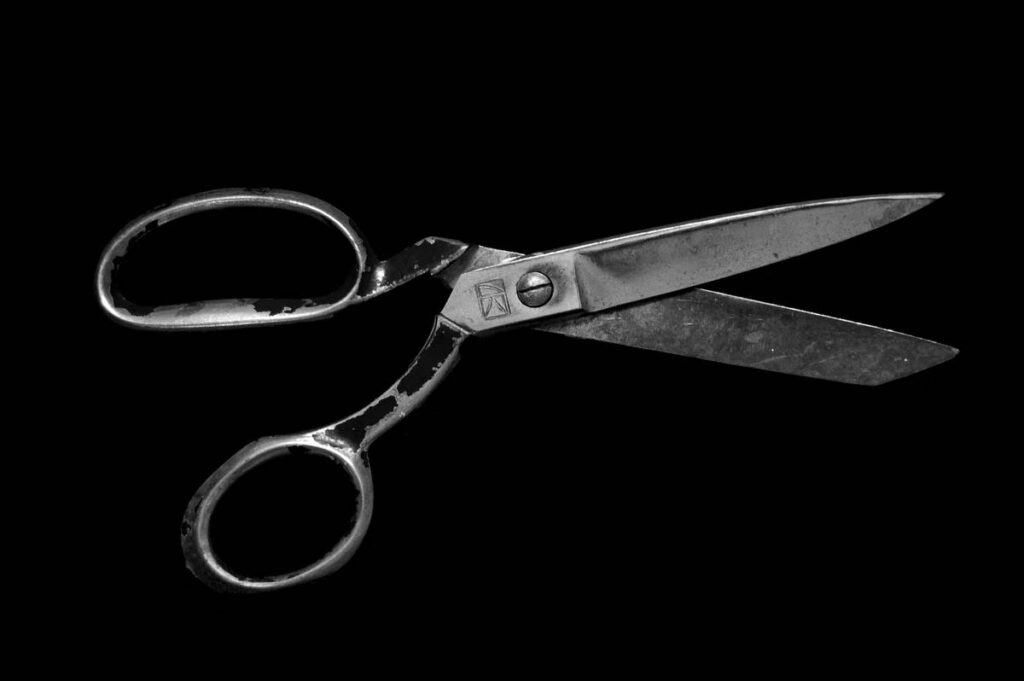
Over-plucked, uneven, or jagged brows? You’re not clumsy—you’re using the wrong tool. Most “eyebrow scissors” sold online are repurposed craft shears with dull tips, weak tension, and zero control. The result? Accidental snips that take weeks to grow back. Enter precision eyebrow scissors: purpose-built, micro-engineered, and calibrated for millimeter-level accuracy. This isn’t vanity—it’s strategy.
The Core Problem: Why Generic Scissors Sabotage Your Brows
Drugstore kits bundle flimsy, blunt-tipped mini-scissors alongside tweezers meant for a dollhouse. They lack blade alignment and tension calibration—two non-negotiables for safe brow trimming. Worse, their tips often splay outward under pressure, catching multiple hairs at once. One slip and you’ve created a gap that screams “I panicked.”
Think about it: your brows frame your eyes—the focal point of human recognition. Would you sketch a masterpiece with a chewed-up pencil? Of course not. Yet millions trust $5 “brow kits” with tools never tested on real skin.
How to Choose & Use Precision Eyebrow Scissors Like a Pro
True precision eyebrow scissors aren’t just small—they’re engineered. Surgical-grade stainless steel. Offset blades for visibility. Tips fine enough to isolate a single stray hair without disturbing its neighbors.
Blade Geometry Matters More Than Size
Look for straight, ultra-thin blades (not curved like nail scissors). Curved blades hide the cut point—disastrous when working near the lash line. Straight blades let you see exactly where the snip lands.
Tension Is Silent Control
Too loose? Blades wobble. Too tight? You’ll fatigue mid-groom. Ideal tension offers slight resistance—like closing a luxury car door. Test by cutting a single strand of thread; it should sever cleanly without bending.
Tip Design Dictates Safety
Blunt tips prevent accidental pokes—but they must still be sharp *internally*. Many brands file down entire tips, sacrificing cutting ability for false safety. Seek scissors with **blunt exteriors** but **micro-sharpened inner edges**.

| Tool Type | Blade Material | Tension Control | Best For | Avg. Lifespan |
|---|---|---|---|---|
| Discount Kit Scissors | Low-grade stainless or nickel alloy | None (fixed, often weak) | One-time use (if you’re lucky) | 1–3 months |
| Nail Scissors Repurposed | Hardened steel (curved blades) | Moderate, inconsistent | Toe hair—not brows | 6–12 months |
| Precision Eyebrow Scissors | Surgical-grade Japanese stainless steel | Adjustable screw mechanism | Daily maintenance, sparse or thick brows | 3–5+ years |

The Industry Secret: Salon Pros Don’t Trim—They Taper
Here’s what no tutorial tells you: elite brow artists rarely cut hairs to a uniform length. Instead, they use precision eyebrow scissors to taper—lightly snipping only the very tips of overly long hairs to soften harsh lines. This preserves natural fullness while eliminating that “brushy” look. The math is simple: remove 1mm instead of 3mm, and your brows stay dense, youthful, and dimensional. But this technique demands tools with sub-millimeter blade precision—something mass-market shears can’t deliver. And most clients never realize their stylist’s secret weapon costs more than their entire drugstore kit.
Frequently Asked Questions
Can I use regular small scissors for eyebrows?
No. Regular mini-scissors lack blunt safety tips and calibrated tension, increasing risk of nicks and uneven cuts. Precision eyebrow scissors are engineered specifically for facial hair near sensitive skin.
How often should I replace my precision eyebrow scissors?
Every 3–5 years if cleaned properly and stored dry. Dullness shows as hair bending instead of cutting cleanly—don’t wait for rust.
Are angled blades better for brows?
No. Angled or curved blades obscure your view of the cut point. Straight blades give full visibility, critical for avoiding over-trimming near the arch or tail.